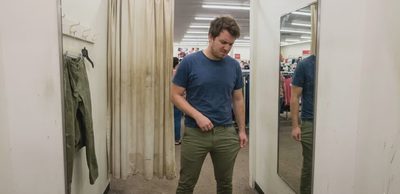
Walk into any fast-fashion store and you'll see guys who already own plenty of clothes still browsing. The cycle is familiar: buy something new, wear it twice, realize it doesn't look right, leave it in the closet, then buy more. The problem isn't the guy. The problem is that nobody taught him to shop for shape instead of items.
I spent years on the other side of this equation — first as an assistant patternmaker, then in production development, and later reviewing fit samples for affordable menswear programs. I've seen the same silhouette mistakes repeated season after season. And I've learned that most of them can be fixed without spending a dollar more.
The Real Issue Is Silhouette, Not a Full Closet
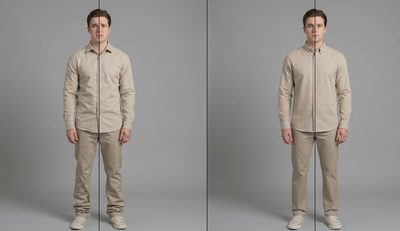
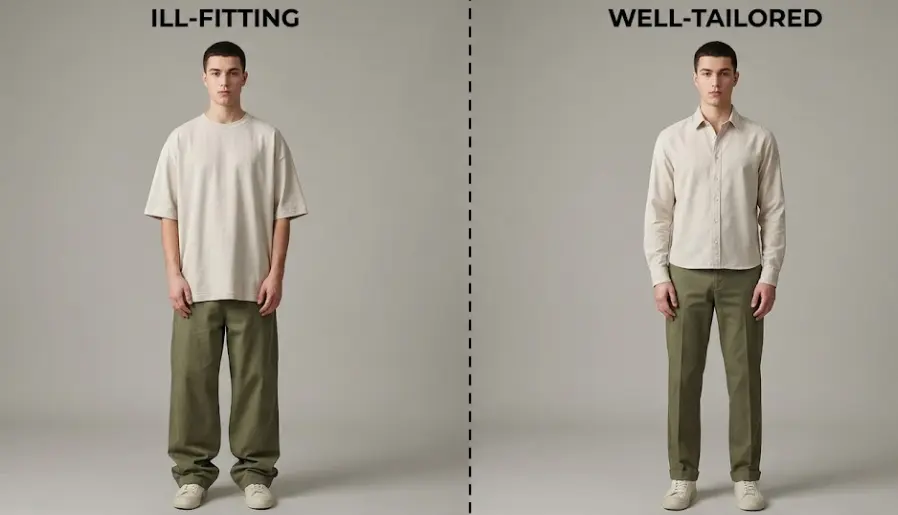
Most men judge clothes by color, price, and whether the size tag says the same letter they always buy. They rarely look at how the garment sits on their body from the side, how the fabric falls from the shoulder, or where the hem cuts their leg line. Those are all silhouette decisions. Get them wrong, and even an expensive piece can drag your whole look down. Get them right, a $30 pair of trousers can outperform a $150 mistake.
Here are the three most common shape mistakes I see on regular men, and what to do instead:
Common Silhouette Mistake | Why It Hurts | Quick Fix |
|---|---|---|
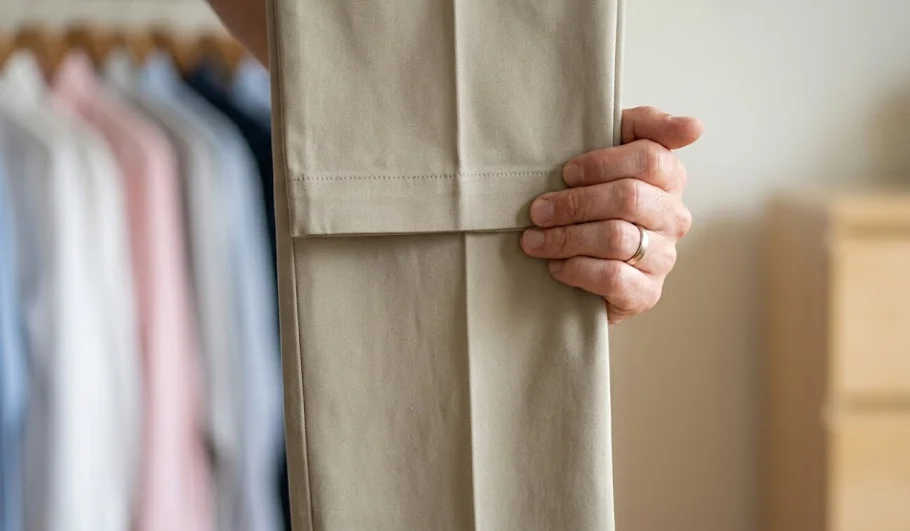
Trousers that pool heavily at the ankle | Shortens the leg, breaks a clean vertical line | Hem to a single break or no break; let the fabric hang straight |
Shirts that drop past the hip | Cuts the leg line, makes the torso look long and unbalanced | Look for hem hitting mid-fly, covering the belt but not the seat |
Jackets or tees with shoulder seams sliding off the bone | Collapses the upper body shape, creates a slouched outline | Shoulder seam must sit exactly at the shoulder bone edge |
None of these fixes require a tailor. They require looking at a garment differently before you buy it.
You Don't Need a New Wardrobe. You Need Sharper Judgment.
I've walked enough factory floors to know that a good silhouette doesn't come from expensive fabric alone. A well-cut cotton chino will hold a straight line. A poorly graded polyester trouser will twist and collapse. The difference is in the pattern — how the side seam is balanced, how the back rise is measured, how the hem width relates to the shoe. These are things I checked daily when approving samples.
For a regular guy on a budget, the fastest upgrade is simply buying fewer items but checking the ones he does buy for shape. Straight or relaxed-taper cuts over skinny fits. Shoulder seams that sit on the bone. Trousers that hang without puddling. That's not fashion — it's geometry that works.
The Rule This Blog Is Built On
Most men don't need more pieces. They need better shape, cleaner proportions, and the confidence to walk away from bad cuts — even if they're cheap. This is the lens I use in every article on Clean Cut Cheap. If the silhouette is right, the price tag doesn't need to prove anything.