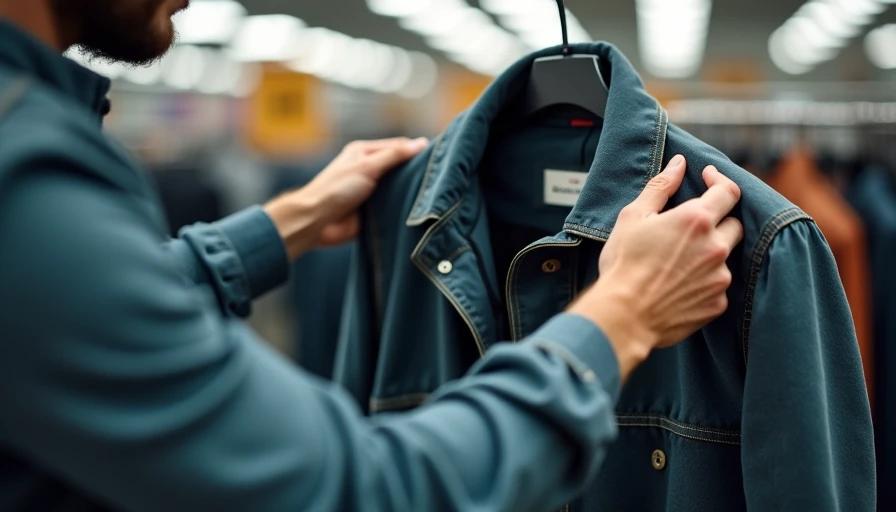
I've handled hundreds of jacket samples across seasons of production development. A good jacket is rarely about expensive fabric. It's about whether the garment was built from a block that understands shoulders, arm movement, and length. A cheap jacket cut on a rushed block will never hang right, no matter how soft the cotton feels. The reverse is also true: a well-cut discount jacket can look like it cost three times the price.
When I walk into Nordstrom Rack or an outlet store, I go through the same five checks — in the same order — every time. These come straight from years of fit reviews and pattern corrections.
The 30-Second Jacket Inspection Checklist
Step | Checkpoint | What to Look For |
|---|---|---|
1 | Shoulder seam | Must end exactly on the shoulder bone edge, not sliding down the arm. Any drop changes the jacket from relaxed to sloppy. |
2 | Body length | Hem should hit mid-fly — covering the belt, not the seat. Too long cuts the leg line and shortens the silhouette. Too short reads as a shrunken mistake. |
3 | Sleeve pitch and armhole | Put the jacket on and move your arm forward. If the sleeve twists or the shoulder lifts, the pitch was wrong from the start. |
4 | Hem and cuff finishing | A clean hem fold and a cuff that holds its shape after a light tug mean better-than-budget construction. Poor finishing ripples and won't survive repeated wear. |
5 | Zippers, buttons, and lining | Zippers should run smoothly without catching. Buttons need reinforced thread shanks, not loose stitching. Lining should be breathable — polyester linings trap heat and start pilling within a season. |
Step 1: Shoulder Seam — The Non-Negotiable
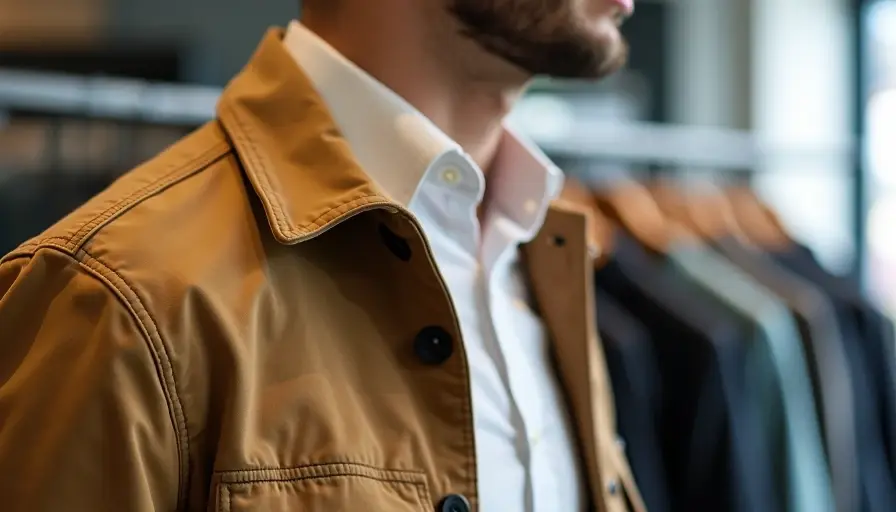
This is the one thing you can't fix with tailoring at any reasonable cost. Put the jacket on and run your finger along the top of the shoulder. The seam must end exactly where your shoulder bone ends. If it drops half an inch onto the arm, the whole upper body collapses. On unstructured jackets — chore coats, shirt jackets, safari jackets — a very slight drop can be intentional. But intentional drop still lands at the outer edge of the bone. It never slides down toward the bicep.
I rejected entire production runs over a half-inch shoulder drift. That's how much it matters.
Step 2: Body Length — Where the Hem Lands
The hem of a jacket should hit at mid-fly: the halfway point of your zipper. This covers your belt but leaves your seat visible underneath. A jacket that hangs past your backside will cut your leg line and make even a tall guy look compressed. A jacket that rides above the belt reads as a shrunken mistake — and on a budget jacket, it's often a sign the grade rules were applied wrong from medium to large.
Step 3: Sleeve Pitch — The Movement Test
Sleeve pitch is the angle at which the sleeve is set into the body. If the sleeve hangs straight when your arms are at your sides but twists when you reach forward, the pitch is off. This comes from a pattern where the sleeve cap and armhole weren't balanced for a natural forward-leaning stance. No tailor fixes sleeve pitch cheaply. If the jacket twists on you during the reach test, put it back.
Step 4: Hem and Cuff Structure
Turn the jacket inside out. Check the hem fold: a clean, even fold with consistent topstitching runs parallel to the edge. A wavy or uneven hem means the fabric was stretched during sewing and nobody corrected it. For cuffs, give a light tug. If the fabric deforms immediately, the interlining — if there even is one — is too light. The cuff should hold its shape without feeling stiff.
Step 5: Hardware and Lining Tell the Whole Story
Good zippers from YKK or similar suppliers glide without catching. If a zipper snags on a brand-new jacket, it will fail completely within a season. Buttons should have a thread shank — a small stem of thread wrapped between the button and the fabric — which prevents the button from pulling through. No shank means someone saved two seconds per button at the factory.
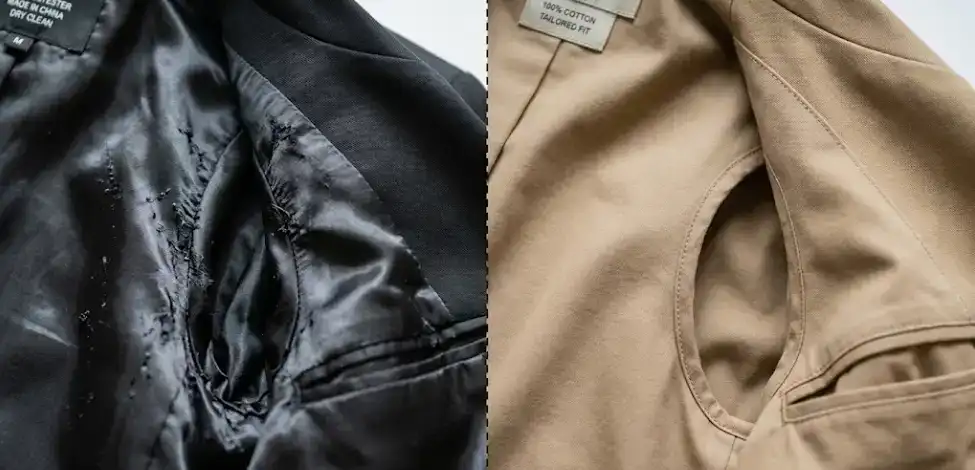
Lining is where budget jackets reveal themselves fastest. A polyester lining that feels like plastic will trap sweat and start pilling around the collar and armhole within three months. If you plan to wear this jacket indoors or in warm weather, look for a cotton, viscose, or unlined body. Better to have no lining than a bad one.
The Final Go / No-Go Decision
After these five checks, I do one final thing: stand naturally with the jacket on, arms at my sides, and look at it from the side in a mirror. If the shoulder seam sits right, the hem falls level to the floor, and there are no diagonal pulling lines from the collar to the armpit, the jacket passes. If any of the five steps fail, I don't care how deep the discount is. A jacket that fits badly on the rack stays bad in your closet. The discount isn't the deal. The fit is.