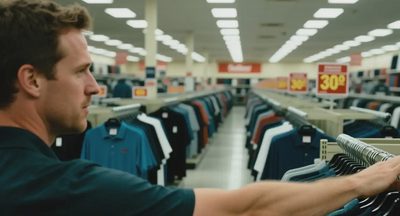
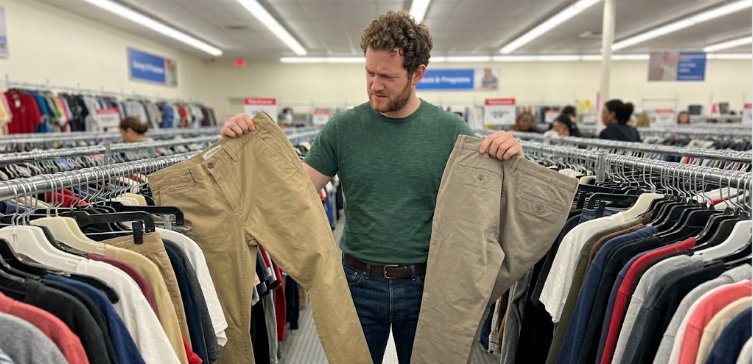
I've handled enough garment samples to know that price and quality don't always run in the same direction. I've seen 30-dollar trousers with cleaner side seams than 100-dollar ones. I've also seen 15-dollar shirts that fell apart faster than the hanger they came on. The difference isn't always visible on the rack. It's visible when you know what to check.
Most guys judge cheap clothes by rubbing the fabric between their fingers. That tells you almost nothing useful. Fabric softness is not quality. Fabric weight is not quality. They're just sensations. The real markers of whether a cheap garment is worth buying sit in the fit, the seam work, the hardware, and the fabric's ability to hold its shape over time. Here's the order I check.
Fit First, Everything Else Second
The best fabric in the world can't fix a bad cut. Before you look at the price tag, before you feel the material, put the garment on. A cheap shirt with a shoulder seam that lands on the bone and a body length that hits mid-fly will always look better than an expensive shirt with a seam sliding down your arm. Fit is the cheapest thing to get right in production and the most expensive thing to fix after purchase. If the fit fails, the garment fails. Walk away regardless of the discount.
The Three Markers That Signal Value
Once fit passes, I check three things in order: seams, hardware, and fabric body.
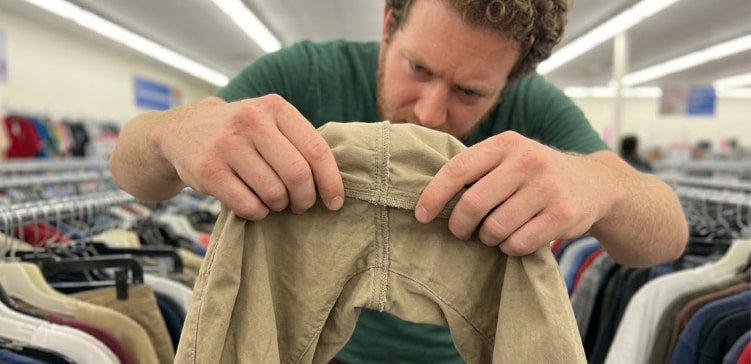
Seams. Turn the garment inside out. On trousers, look at the crotch seam and the side seams. A flat-felled seam or a clean double-stitched seam with bound edges means someone spent time on construction. A single stitch line with raw overlocked edges and hanging threads means the factory was counting seconds. On shirts, check the armhole. A clean armhole with even stitching and no puckering is a strong signal. A puckered armhole with inconsistent seam allowance means the sleeve was set in a rush.
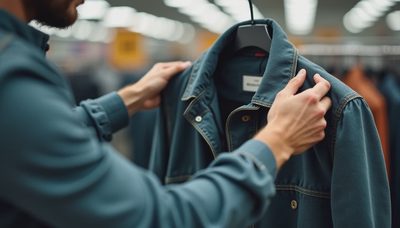
Hardware. Zippers should glide without catching. Buttons should have thread shanks — a small wrapped stem of thread between the button and the fabric. If a button is sewn flat against the cloth with no shank, it will pull through the fabric eventually. Check the zipper brand if it's visible. YKK is a reliable sign, but not the only one. The feel of the zipper matters more than the name on it.
Fabric body. Crumple a section of the fabric in your hand and release it. Good fabric recovers its shape. Cheap fabric holds the wrinkles. This test works on shirts, trousers, and jackets. If the fabric stays crumpled on the rack, it will look rumpled on your body within an hour of wear.
The Signs That Scream "Put It Back"
Some things can't be overlooked, no matter the price. A twisted side seam on trousers — where the outseam curves forward toward the shin — means the fabric was cut off-grain or stretched during assembly. That won't fix itself. A shirt placket that curves to one side means the front panels weren't aligned during cutting. Buttons that feel loose on a brand-new garment will be gone within weeks. Fabric that shines under natural light — especially on navy or black pieces — will look cheap on your body regardless of the brand name on the tag. If you see any of these, put it back. A bad deal on a bad garment is still a loss.
Which Categories You Can Trust Cheap
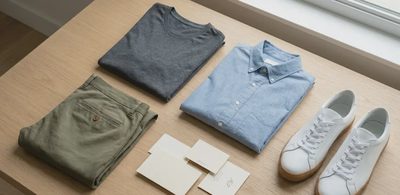
Some categories survive the price drop better than others. Heavyweight cotton tees are hard to ruin if the fabric weight is above 200 GSM. Straight-leg chinos with a mid-rise have a simple pattern with few failure points. Unstructured overshirts have no shoulder pads or canvas to cheapen. Basic knitwear like crew-neck sweaters in solid colors can work well at low prices if the fiber content is mostly natural. These are the categories where I'll take a chance on a budget piece without much worry.
Category | Verdict | The Catch |
|---|---|---|
Heavyweight cotton tees | Safe to go cheap | Must be 200+ GSM with a neck rib that snaps back |
Straight-leg mid-rise chinos | Safe to go cheap | Check side seams and hem finishing |
Unstructured overshirts | Safe to go cheap | Shoulder seam must still sit on the bone |
Solid crew-neck knitwear | Safe to go cheap | Check fiber content; avoid full acrylic if possible |
Tailored jackets | Don't go cheap | Shoulder construction needs skilled labor |
Stretch-heavy skinny pants | Don't go cheap | Elastane degrades fast on budget versions |
Dress shirts with structured collars | Don't go cheap | Collar interlining is the first thing downgraded |
The One Rule That Saves the Most Money
The most expensive garment I own is one I bought on clearance and never wore. The cheapest is one I paid full price for and reach for every week. Price is not value. Value is fit plus frequency. If you won't wear it often because something is slightly off — the shoulder, the length, the feel — then it doesn't matter what you paid. It's expensive at any price.
Before you buy anything cheap, ask yourself one question. Would I wear this tomorrow if I had somewhere to be? If the answer is no, put it back. The rack will still be there next week. Your regret doesn't need to be.