
I learned budget allocation the hard way. In my early twenties, I blew a full paycheck on a pair of designer jeans and wore them maybe twice. The fit was fine. The guilt wasn't. A year later, I was developing production samples for affordable brands, watching the same factory floor produce both a 30-dollar chino and a 150-dollar one. The difference wasn't always where customers thought it was.
The question isn't "how much should I spend." It's "which pieces earn their price." Some items fall apart fast if they're too cheap. Others look nearly identical whether you spend 20 dollars or 80 dollars. The skill is knowing which is which, and that skill comes from understanding what each garment actually does on your body.
Where You Can Save Without Anyone Noticing
These are the pieces where construction is simple, the failure points are few, and the fabric weight matters more than the brand markup.
Category | Why You Can Save | What Still Matters |
|---|---|---|
Heavyweight cotton tees | Simple pattern, hard to ruin if the weight is right | 200+ GSM, neck rib that recovers, solid neutral color |
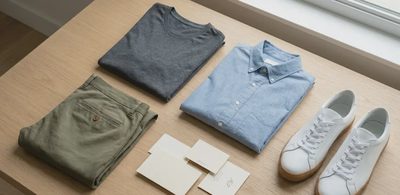
Straight-leg chinos | Mid-rise straight cut has few fit failure points | Side seam hangs straight, matte fabric, clean hem |
Socks and underwear | Same cotton, same elastic, replaced often anyway | Fiber content tag over brand label |
Basic crew-neck sweaters | Knit construction is forgiving at low prices | Mostly natural fibers, not full acrylic |
Unstructured overshirts | No shoulder pads or canvas to cheapen | Shoulder seam on bone, hem at mid-fly |
Where Spending More Actually Shows Up
These are the pieces where pattern precision, material quality, and durability separate the good from the disposable. Spend mid-range here and check the fit religiously.
Category | Why Spend More | What You Get |
|---|---|---|
Shoes (sneakers and leather) | Anchor the entire silhouette. Cheap materials crack and deform fast. | Better leather or upper material, soles that don't wear unevenly, shape that holds |
Oxford button-down shirts | Collar and shoulder structure demand good pattern work | Collar that doesn't curl, shoulder seam on bone, placket that stays flat |
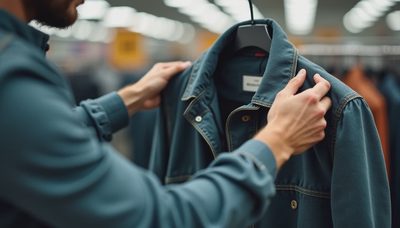
A warm coat or jacket | Worn daily in cold months. Cheap insulation fails fast. | Fabric weight, lining that breathes, sleeves that don't twist |
Tailored trousers for formal settings | Precision in rise, drape, and hem breaks on thin fabric | Wool blends that hang clean, proper waistband construction, hem that holds its shape |
A leather belt | Worn almost every day. Cheap bonded leather splits and peels within months | Full-grain leather, clean buckle that doesn't chip, edges that don't fray |
The pattern I follow is simple. Spend on what touches the ground and what frames your face. The shoes, the shirt collar, the jacket shoulder. Those are the points that define a silhouette. Everything in between — the tee, the chinos, the knitwear — can lean budget as long as the fit is right.
How to Decide When You're Standing in the Store
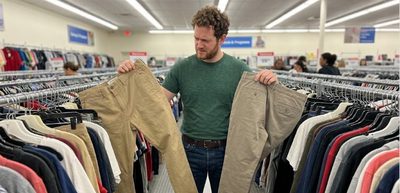
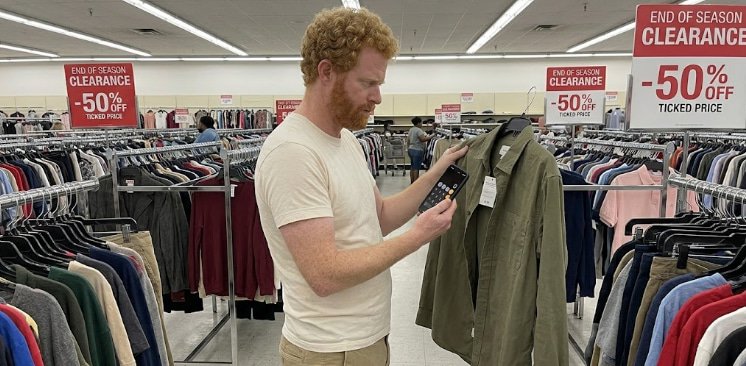
Forget the brand. Forget the sale percentage. Ask three questions. Will I wear this at least once a week? Does the fit work on my body without adjustments? Is this a category where cheap usually falls apart? If yes, yes, and no — buy it. If no, no, and yes — put it back.
The most expensive piece in your closet is the one you bought because it was cheap and never wore. The best investment is the one you reach for every week, even if it cost more upfront. Spend where it counts. Save where it doesn't. The budget isn't the point. The frequency is.