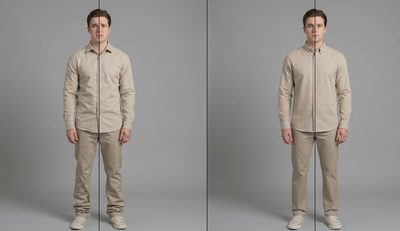

I've watched guys stare into their closets and say the same thing: "I don't know why it doesn't look right." The shirt is fine. The pants are fine. The shoes are fine. But when they put it all together, something is off. They blame their taste. They blame their body. They rarely blame the one thing that's actually responsible: the proportions between the pieces.
In patternmaking, proportion isn't an abstract concept. It's math. It's the relationship between the length of a shirt and the length of a leg. The width of a shoulder and the taper of a trouser. The break of a hem and the height of a shoe. When those relationships are balanced, the outfit reads as clean and intentional. When they're not, it reads as slightly wrong — even if nobody can explain why. Most men walk around with proportion problems they never learned to see. Here are the ones I see most often.
The Three Proportion Mistakes I See Everywhere
Mistake | What Happens | The Fix |
|---|---|---|
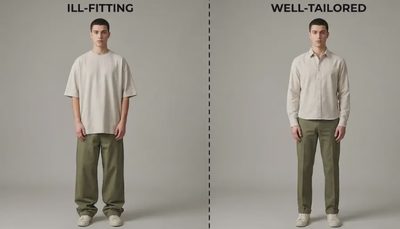
Shirt too long, pants too short | Torso swallows the legs. You look shorter and wider than you are. | Hem hits mid-fly. Leg line starts at the hip, not the knee. |
Jacket too long over slim pants | Jacket cuts the leg line at the widest part of the seat. Legs disappear. | Jacket hem ends at mid-fly. The seat stays visible underneath. |
Chunky shoes with a narrow hem | The visual weight at the bottom fights the slim line above it. The outfit topples. | Match hem width to shoe bulk. A wider hem balances a heavier shoe. |
These aren't taste problems. They're balance problems. And they show up on guys wearing expensive clothes just as often as guys on a budget. The price of the shirt doesn't fix its length. The brand of the shoe doesn't fix its mass.

Why Trends Can't Fix a Proportion Problem
Men often reach for style when what they actually need is structure. A wider pant is trending right now, so a guy buys wide pants. But if he pairs them with a cropped jacket and a heavy-soled shoe, the proportions can still be wrong. The pieces are fashionable. The balance is off. The result is an outfit that reads as trying hard rather than looking good.
The reverse is also true. A guy with excellent proportions can wear basics from Target and look more put together than someone in designer pieces with bad balance. Proportion doesn't care about price. It cares about where things end.
How to Check Your Proportions Without Buying Anything
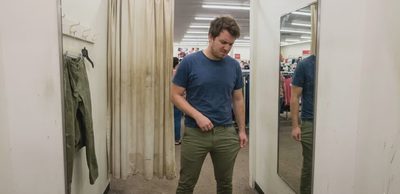
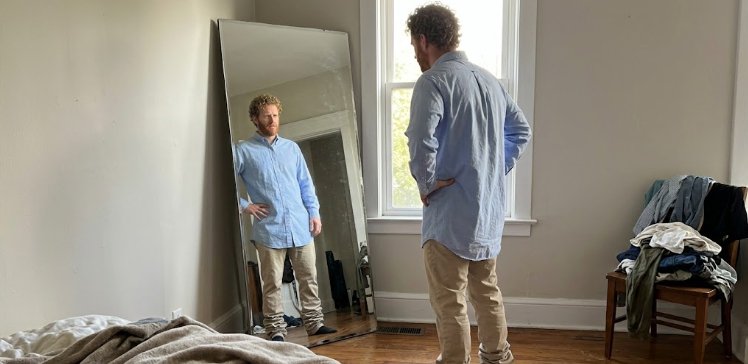
Stand in front of a full-length mirror with your arms at your sides. Look at where your shirt hem hits. If it drops past your seat, your torso is visually longer than your legs. Try tucking the shirt or switching to one that hits mid-fly. Now look at your pant hem. If it pools heavily around your ankle, your leg line stops short. A single clean break or no break lets the eye travel all the way down.
The goal isn't to follow a rule book. It's to train your eye to see balance instead of items. A balanced outfit has a clear top half and a clear bottom half, with the dividing line sitting at the hip — not the thigh, not the knee. That dividing line is the most important line in any outfit. Get it right, and the rest is details.

Build Proportion Awareness Before You Build a Wardrobe
Before you buy another shirt or another pair of pants, spend a week looking at the outfits you already wear. Don't ask if the color is right or if the brand is good. Ask where the lines are. Where does the shirt end? Where does the pant break? What happens to the silhouette when you change shoes? The answers will teach you more about dressing well than any trend report or shopping guide.
Good proportion is the cheapest upgrade in menswear. It costs nothing to hem a pant. It costs nothing to tuck a shirt. It costs nothing to stand in front of a mirror and learn to see what's actually there instead of what the tag told you to expect. Most men don't need more clothes. They need better balance. The rest follows.