A casual office dress code is harder to navigate than a formal one. When the rule is "wear whatever," most guys default to whatever they wore in college — logo hoodies, faded jeans, and sneakers that should have been retired two years ago. The other extreme is no better: a stiff dress shirt tucked into baggy khakis, looking like an intern who raids his dad's closet. Both read as a guy who hasn't figured it out yet.
I've worked in offices with no dress code and offices with a strict one. In both, looking like you belong comes down to fit and formula, not labels or price. Below are three outfit combinations I've tested, adjusted, and recommend. Each stays under $120 total and works on a normal build.
Formula | Top | Bottom | Shoes | Total Budget |
|---|---|---|---|---|
The Standard | Oxford button-down shirt (white or light blue) | Straight chino trousers (khaki or stone) | Clean leather sneakers or plain-toe derby | 80–80–110 |
The Relaxed Layer | Heavyweight cotton tee (neutral) + unstructured overshirt (olive or navy) | Relaxed tapered chinos (gray or sand) | Minimalist sneakers | 90–90–120 |
The Sharp Casual | Lightweight poplin shirt (pale blue or cream) | Dark straight-leg jeans (no distressing) | Simple leather loafers or desert boots | 85–85–115 |
Formula 1: The Standard
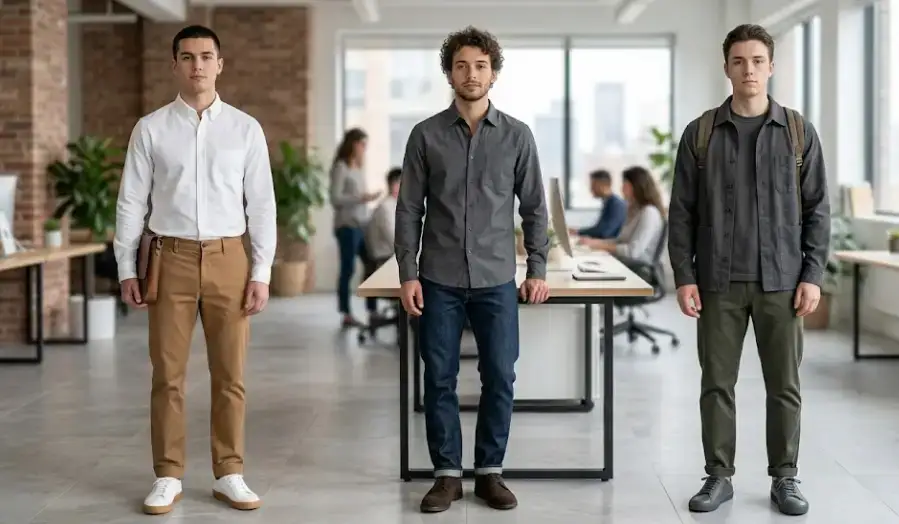
This is the backbone. A white Oxford button-down tucked into straight khaki chinos, finished with clean leather sneakers or a plain-toe derby. From a fit perspective, the Oxford needs to have a shoulder seam that sits on the bone and a body length that stays tucked without billowing. The chinos should be straight through the leg — not slim, not baggy — with a clean single break over the shoe. This outfit says "I handle things" without saying a word.
Formula 2: The Relaxed Layer
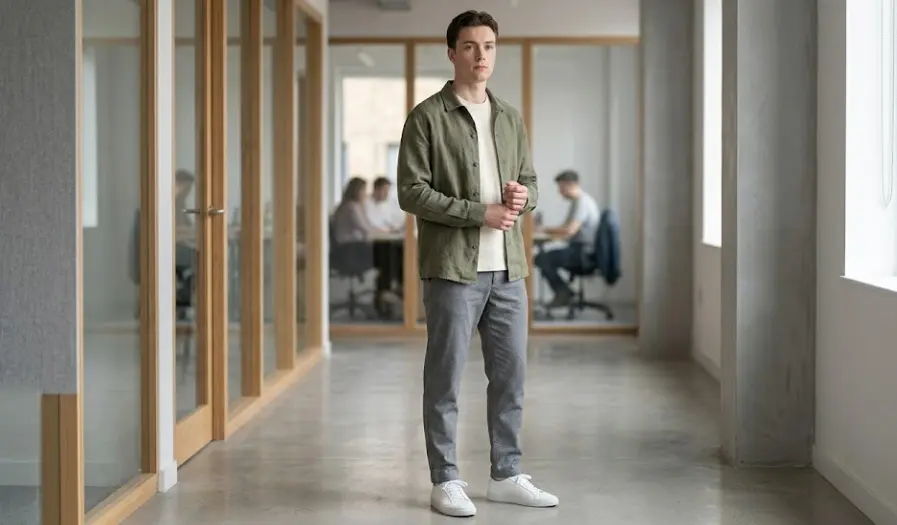
For offices where even a tucked shirt feels too dressy, start with a heavyweight crew-neck tee in charcoal or cream. Layer an unstructured overshirt — think chore coat or shirt jacket in olive or navy — and wear it open. The overshirt adds structure through the shoulder without stiffening the look. Finish with a relaxed tapered chino and clean minimalist sneakers. The key is the overshirt shoulder: the seam must sit at the shoulder bone, not slide down the arm. Oversized is not the goal. Proportional is.
Formula 3: The Sharp Casual
When you need to cross from casual into competent without wearing a blazer, swap the Oxford for a lightweight poplin shirt and pair it with dark straight-leg jeans. The jeans must be dark indigo or black, with no rips, no fading, no contrast stitching. The poplin shirt drapes lighter than oxford cloth, so it looks intentional when worn untucked — as long as the hem hits mid-fly. Add simple leather loafers or a pair of desert boots. The belt should match the shoes. That one detail changes how people read this outfit.
Three Things to Avoid Immediately
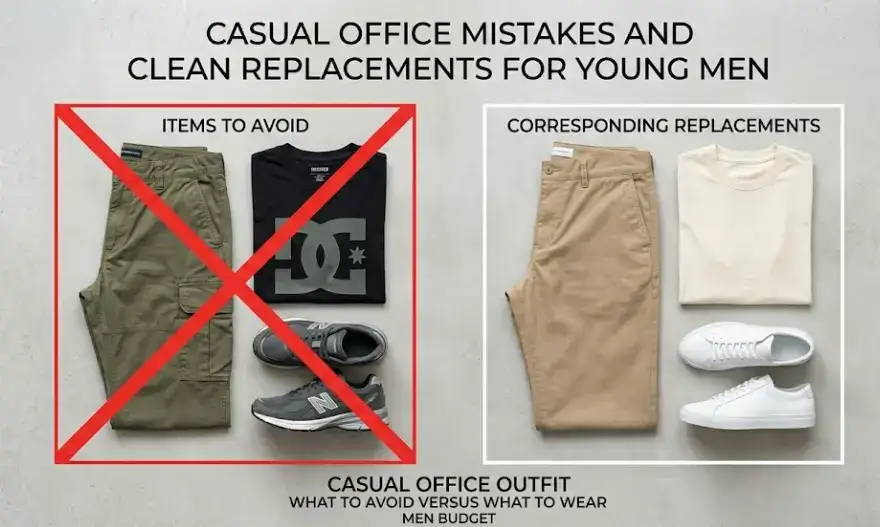
Baggy cargo pants or shorts. These read as student, not employee. Even in a casual office, structured trousers matter. If your pants have more than four visible pockets, skip them.
Graphic tees with slogans or logos. A printed tee under a jacket can work on the weekend, but in an office it reads as "I didn't think about what I put on this morning." A plain heavyweight tee costs the same and always looks cleaner.
Running sneakers with reflective stripes. Athletic shoes signal gym, not work. A simple white leather sneaker with no visible branding costs $25 and does the job without dragging your whole outfit into the locker room.
The Quick Check Before You Walk Out the Door
Stand in front of a mirror and ask three things. First, does my shoulder seam sit on the bone? Second, does my pant leg fall straight without pulling or pooling? Third, would I trust someone dressed like this to handle a client? If the first two are yes and the third is "yeah, probably," you're dressed right. The budget doesn't define the impression. The fit does.