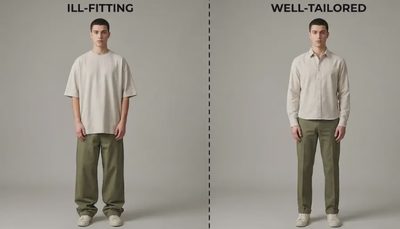
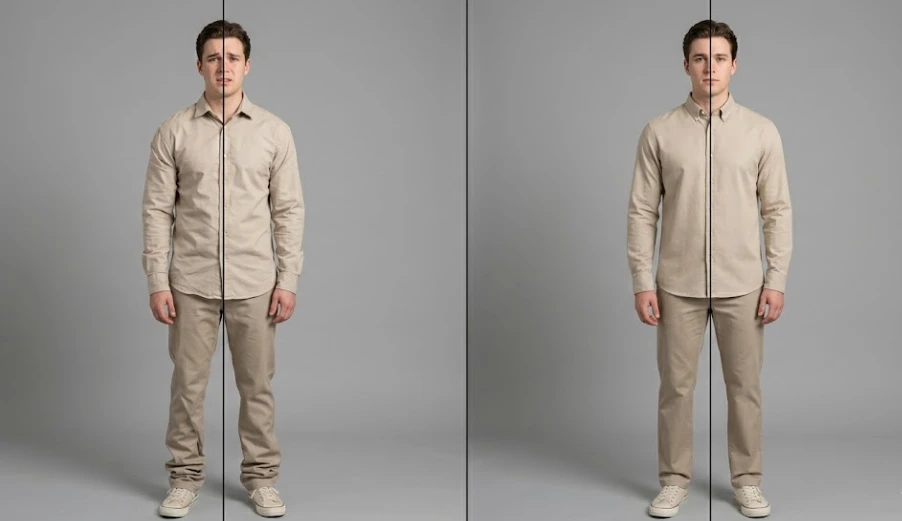
There's a phrase I heard constantly during my years in production development: "It's fine for the price." I learned to hate that phrase. What it usually meant was: the fabric is acceptable, but the fit is off — and nobody wants to spend the money to fix the pattern. The fabric wasn't the problem. The shape was. The fabric just got blamed because it's the part people can touch.
When a cheap garment fits wrong, it's rarely because someone used a cheap needle or a cheap sewing machine. The decisions that ruin fit happen earlier — on the pattern table, in the grading rules, and on the cutting room floor. Those decisions are invisible to shoppers, but they're what separate a 40-dollar shirt that hangs clean from a 40-dollar shirt that looks like it's fighting your body.
Where the Fit Actually Goes Wrong
Pattern blocks that ignore real bodies. Most affordable brands don't develop their own blocks — the foundational templates that determine shoulder slope, armhole shape, and body length. They license or copy blocks designed years ago for a different fit model. If the block was made for a lean 6'1" fit model with narrow shoulders, every size derived from it carries that shape. A regular guy puts it on and pulls at the collar wondering why nothing sits right.
Grading that gets automated and abandoned. Grading converts a size medium into every other size. Done properly, it's a careful manual process balancing shoulder width, sleeve length, body length, and neck circumference across a full size range. Done cheaply, a factory hits "auto-grade" on CAD software and ships the output without checking. The result: a medium that fits passably and an extra-large where the shoulder seam lands mid-bicep. I've rejected samples for exactly this problem more times than I can count.
Fabric cutting that ignores grain lines. Even a perfect pattern fails if the fabric is cut off-grain. When a side seam twists forward on a cheap pair of trousers, it's often because the fabric was laid slightly crooked on the cutting table and nobody corrected it. The pattern was right. The cut was wrong.
The Parts That Fail Most Often
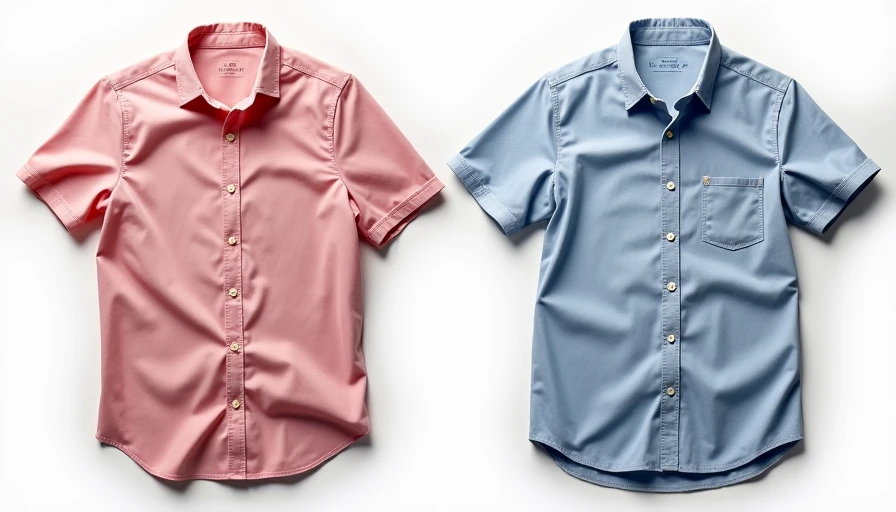
After years of fit reviews, I can tell you exactly where budget garments break down most predictably:
Problem Area | What Happens | Why It Happens |
|---|---|---|
Shoulder slope | Seam slides off the bone or pulls diagonally to the neck | Block designed for a different body type; no adjustment for real shoulder angles |
Back rise on trousers | Waistband pulls down when sitting, seat bags out | Back rise cut too short to save fabric; no curvature for glutes |
Side seam alignment | Seam twists forward toward the shin | Fabric cut off-grain or stretched during assembly without correction |
Sleeve pitch | Sleeves twist when arms move forward | Armhole and sleeve cap not balanced for natural forward-leaning stance |
Collar and lapel roll | Collar gaps away from neck, lapels don't lie flat | Interlining too light or fused incorrectly; no hand-pressing stage |
These aren't fabric problems. They're pattern, cutting, and assembly problems. A 200-dollar jacket and a 40-dollar jacket can be made from similar cotton twill. The difference is whether someone spent time getting the shoulder and collar right.
Which Cheap Items Still Win
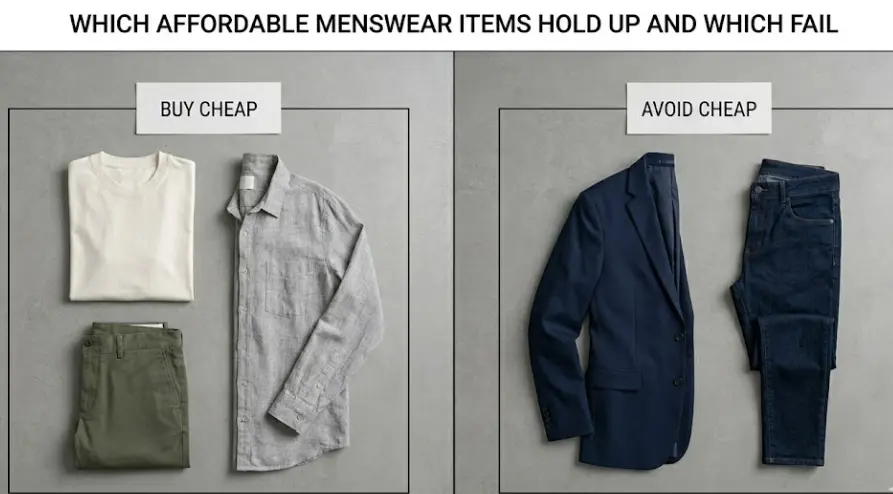
Not every category suffers equally. Over years of handling samples and shopping sales, here is what I've learned holds up surprisingly well at low prices — and what rarely does:
Category | Verdict | Reason |
|---|---|---|
Heavyweight cotton tees | Buy cheap | Weight hides construction shortcuts; 200+ GSM drapes well regardless of brand |
Straight-leg chinos | Buy cheap | Simple pattern with fewer failure points; mid-rise straight cut is hard to screw up |
Unstructured overshirts | Buy cheap | No shoulder padding to misplace; relaxed fit forgives minor pattern drift |
Tailored jackets | Avoid cheap | Shoulder construction, canvas, and lapel roll require skilled labor that cheap factories skip |
Stretch-heavy skinny pants | Avoid cheap | Stretch fabric amplifies cutting errors; knees bag and twist aggressively within weeks |
Check Fit Before You Check the Price
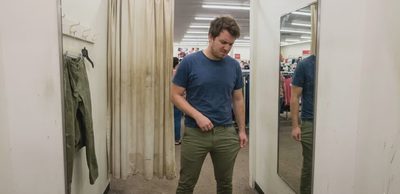
The habit worth building is this: before you look at the sale tag or the fabric content, put the garment on and check three things. Does the shoulder seam land on bone? Does the side seam hang straight? Does anything twist when you move? If two out of three answers are no, the price doesn't matter. Walk away. The cheapest garment in the world is the one you actually wear. The most expensive is the one that hangs in your closet with the tags still on because it never fit right.