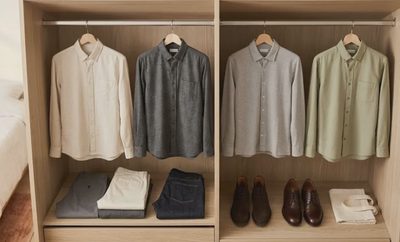
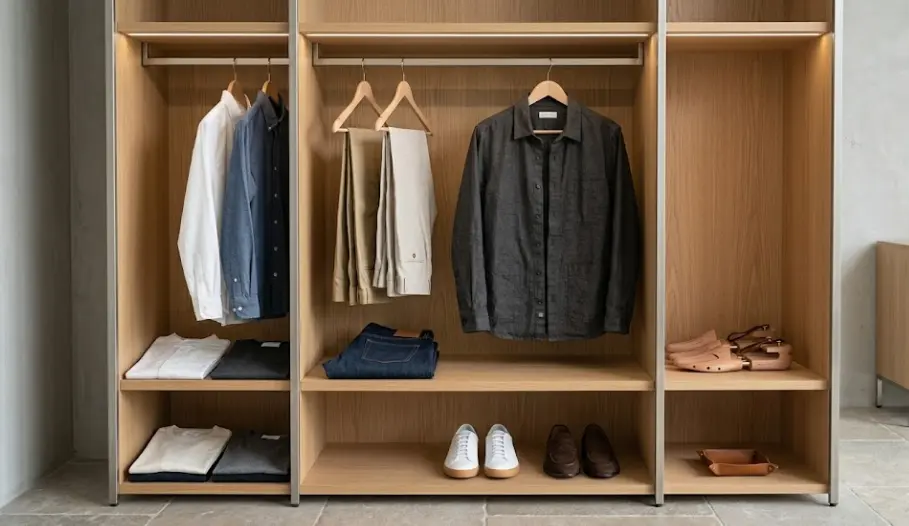
I've spent too much time around guys who own 40 shirts and wear the same three. A closet stuffed with bad decisions feels full but does nothing for you on a Tuesday morning. The fix isn't buying more. The fix is owning fewer pieces and making sure every single one pulls its weight in fit and function.
When I worked in production development, I watched brands try to sell men "complete wardrobes" that were really just 25 items designed to pad a shopping cart. You don't need 25. You need about ten pieces that work together, fit your actual body, and don't require a second thought. Here is that list, ordered by how much I'd invest in each tier.
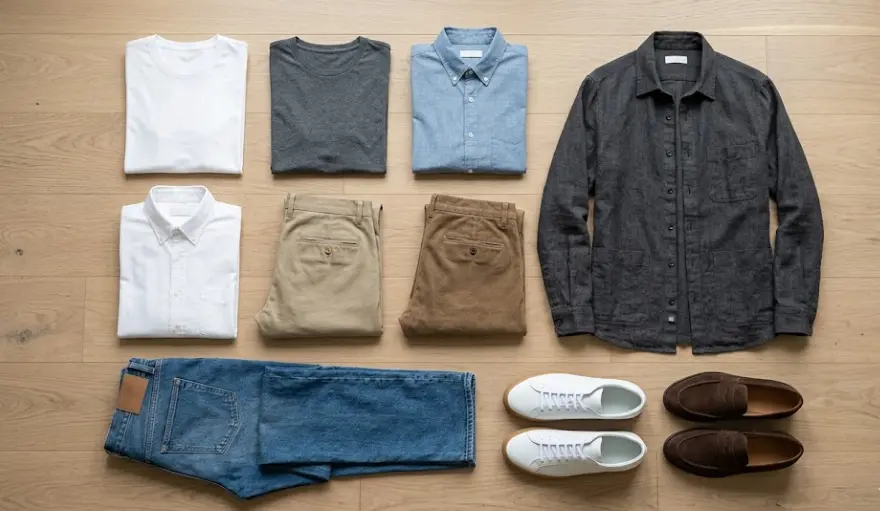
The 10 Pieces
Tier | Piece | Budget Range | Why It Matters |
|---|---|---|---|
Invest More | Clean white leather sneakers | 25–40 | The anchor of almost every casual look; cheap pleather cracks fast |
Invest More | Straight-leg mid-wash jeans | 30–45 | Worn most days, should have a slight structure to the denim |
Mid-Range | Straight chino trousers (khaki) | 22–30 | Clean silhouette for work, dates, and everything between |
Mid-Range | Unstructured overshirt (olive or navy) | 25–35 | Adds a layer without adding visual noise |
Mid-Range | Oxford button-down shirt (white) | 20–28 | Bridges casual and smart; check shoulder seam placement |
Mid-Range | Lightweight poplin shirt (light blue) | 18–25 | Warm-weather alternative to oxford; stays crisp in a casual office |
Budget Smart | Heavyweight cotton tee (cream) | 12–18 | Over 200 gsm hangs cleaner, doesn't cling to the midsection |
Budget Smart | Heavyweight cotton tee (charcoal) | 12–18 | Dark neutral anchors lighter pieces |
Budget Smart | Tailored sweatpants or relaxed chinos (stone) | 18–22 | One weekend pant that isn't jeans; look for a straight or relaxed taper |
Budget Smart | A second clean shoe (loafer or plain-toe boot) | 20–30 | Pulls the whole wardrobe into slightly dressier territory when needed |
Nothing here requires a logo. Nothing requires a specific brand. Everything is chosen because it works on a normal build and plays well with the other nine pieces.
How These 10 Pieces Cover Your Actual Life
You don't need a separate outfit for every occasion. You need combinations that scale. Here is how these ten pieces break down across a typical week:
Day | Outfit | Pieces Used |
|---|---|---|
Monday office | Oxford shirt + chinos + loafers | 3 |
Tuesday office | Poplin shirt + jeans + leather sneakers | 3 |
Wednesday casual | Charcoal tee + overshirt + chinos + sneakers | 4 |
Thursday office | Oxford shirt + jeans + loafers | 3 |
Friday casual | Cream tee + overshirt + relaxed chinos + sneakers | 4 |
Saturday weekend | Charcoal tee + jeans + sneakers | 3 |
Sunday errands | Cream tee + stone relaxed chinos + loafers | 3 |
Every piece appears multiple times. The palette — white, cream, navy, olive, khaki, charcoal — means any top works with any bottom. This isn't a fashion statement. It's a system that saves you fifteen minutes every morning.
Where to Spend and Where to Save
The hierarchy is simple. Put the most money into what touches the ground and what frames your face. Shoes and the shoulder-to-collar zone define your silhouette more than any other part. Cheap shoes degrade fast and drag down an otherwise clean look. A poorly cut shirt collar or a shoulder seam that slides off the bone ruins the whole upper body.
Pants sit in the middle. A decent pair of chinos from a brand that understands straight fit will perform well at $25. You don't need to double that unless you're chasing a specific fabric or construction detail.
Tees can be cheap, but not thin. The weight of the cotton matters more than the price tag. A 14-oz heavyweight tee looks better after six washes than a 40-oz tissue-thin designer tee.
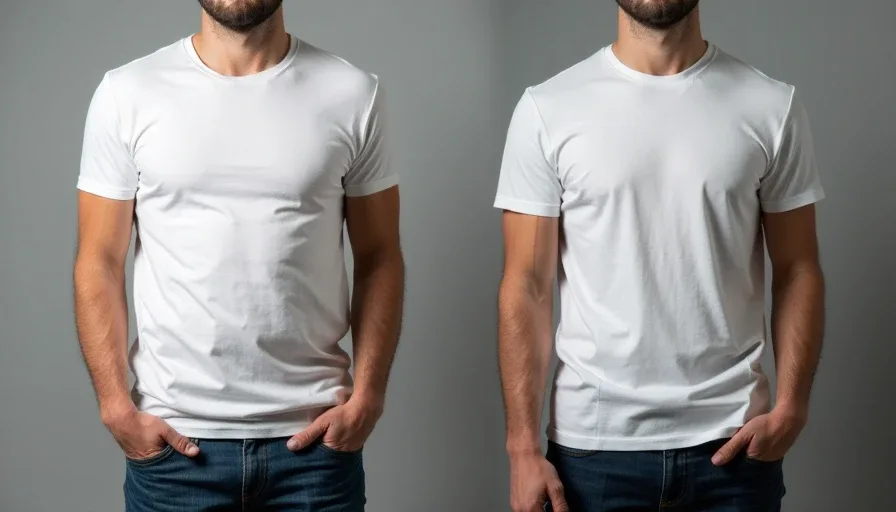
The only rule to make a wardrobe both cheap and clean
Cut and fit come before quantity. I’d rather own three pairs of pants that fall straight from the hip than ten pairs that bunch at the knees. When your closet is small, every seam matters — a bad shoulder or a twisted side seam has nowhere to hide. But the reverse is also true: if you choose every piece by shape first, even the few items you grab on a whim will look deliberately curated.