Most young men I see are wearing pants at least one cut too tight. I don't blame them. For a solid decade, the message from every mall brand was "slimmer is better." Even guys with athletic thighs and normal builds got squeezed into shapes that were never patterned for them.
I've spent hundreds of hours on fit approvals — measuring thigh circumference, checking back rise angles, and watching how trousers hang on real bodies, not just fit models. The pattern doesn't lie. A pant that pulls across the hip and bunches behind the knee isn't "modern." It's just misgraded.
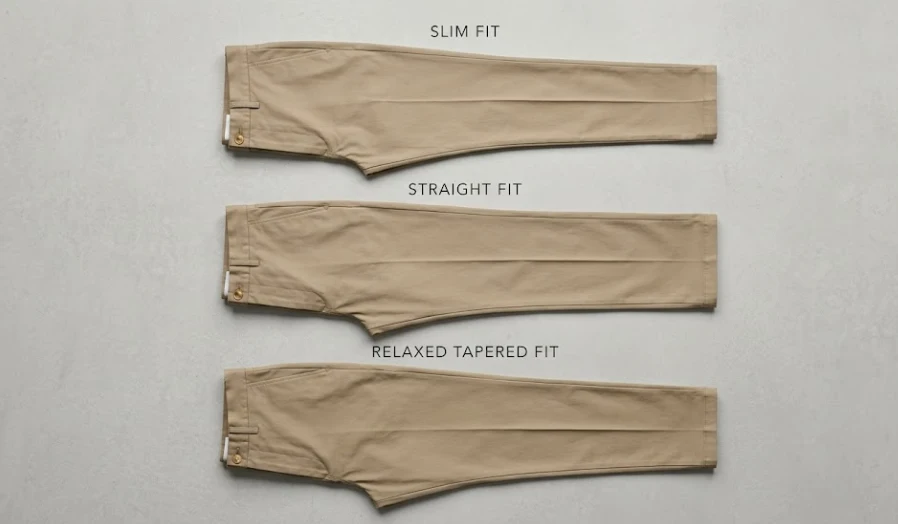
The right pant shape does three things: it follows the natural line of your leg without gripping it, it moves with your body when you sit or walk, and it creates a clean vertical line from hip to hem. Here's how the three main shapes actually perform on a normal build.
Slim, Straight, and Relaxed: What They Really Mean
Shape | Leg Profile | Best For | Watch Out For |
|---|---|---|---|
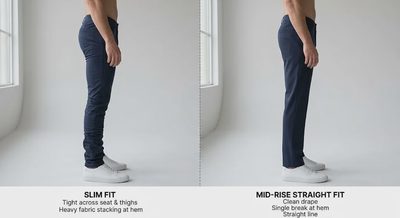
Slim | Tapers from thigh to ankle, close to the leg | Very lean builds with narrow hips | Often pulls at the crotch and knee on average guys; thigh room is usually the dealbreaker |
Straight | Even width from thigh to hem, slight ease throughout | Most average builds, athletic thighs, guys who want a timeless look | Can look boxy if the leg opening is too wide relative to shoe size |
Relaxed Taper | Fuller in the seat and thigh, tapers gently below the knee | Athletic builds, guys with bigger glutes and thighs, anyone who wants comfort without looking sloppy | A bad taper can look carrot-shaped; the taper needs to be gradual |
Why Most Young Men Should Start With a Straight or Relaxed Taper
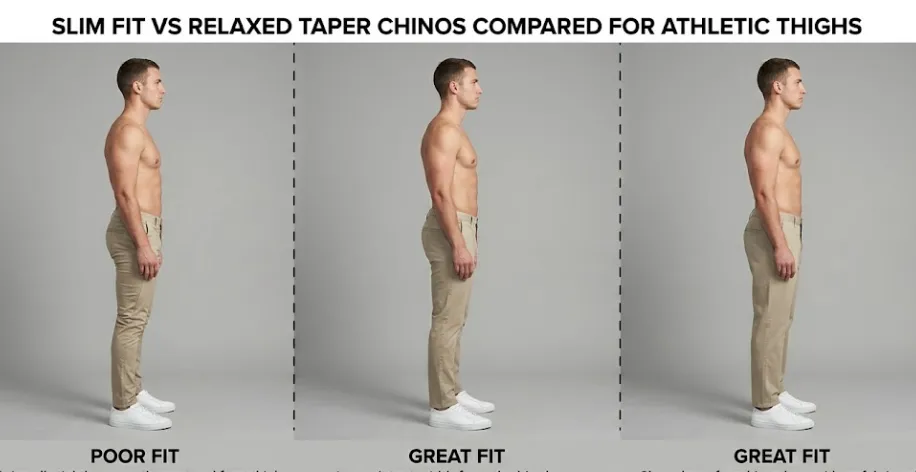
For the average guy — not skinny, not a bodybuilder, but a normal active build — a straight fit or a relaxed taper solves almost every fit problem at once. The thigh doesn't pull. The knee doesn't bag after sitting. The hem sits cleanly over a sneaker or a loafer without puddling.
A slim fit can work, but it demands a very specific body type and a very precise pattern. Budget slim pants are especially risky because the taper is often too aggressive for the fabric weight. You end up with a fit that looks fine standing up but turns into a mess the moment you move.
I've learned to look for one number on a pant long before I check the waist size: the thigh measurement. For a regular guy with a 32–34 waist, a thigh measurement under 11.5 inches across (23 inches circumference) will almost always pull. A straight cut with a 12–12.5 inch thigh and a leg opening around 7–7.5 inches gives the cleanest line on most shoe sizes.
How Height and Weight Affect the Choice
Guys under 5'9" should avoid excessively wide leg openings and heavy breaks. A straight cut with a very slight taper and a no-break hem keeps the leg line long. Taller guys can handle a fuller cut, but a relaxed taper still looks more intentional than a fully wide-leg pant on a budget fabric.
Body weight matters mostly in the seat and thigh. If you lift, hunt for a relaxed taper with a higher back rise. A low rise on an athletic build creates a "shelf" effect at the seat and pulls the side seams forward. That's a pattern geometry problem, not a weight problem.
The Safest Recommendation I Can Give
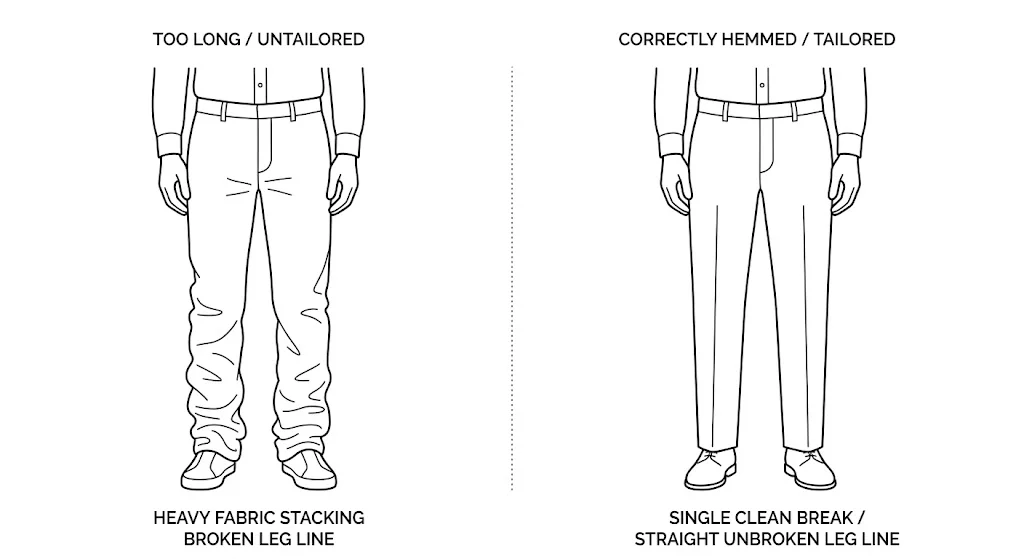
If you walk into a store tomorrow and want one pant shape that works for a normal young man, find a straight-leg chino in a matte neutral color with a mid-rise, a thigh that gives you at least an inch of ease, and a hem width that breaks once over your shoe. Not too skinny, not too wide, not trying to be fashion. Just cut to make your body look balanced.
That's the shape most affordable brands actually get passably right. And when they get it right, you don't look like you're trying. You just look good.