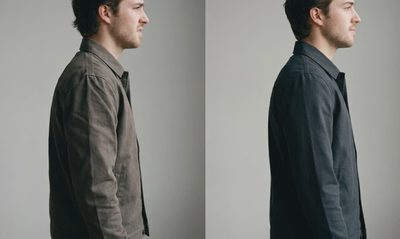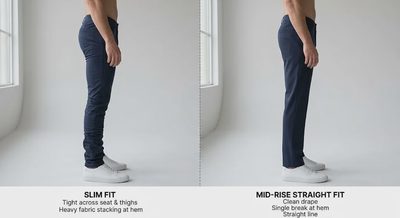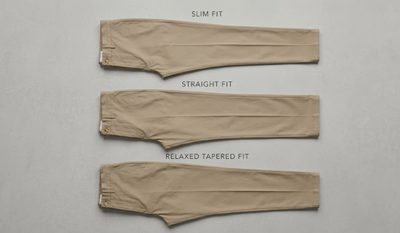
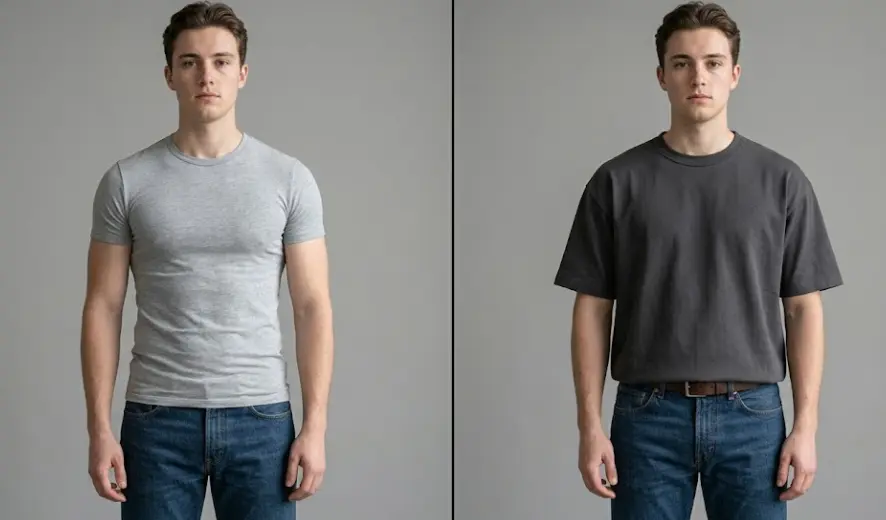
During my time approving knit samples for mass production, one failure pattern kept repeating: the size medium tee that fit the fit model perfectly looked completely different on a regular guy. The shoulder seams pulled in, the sleeves rode up, and the hem gripped the stomach. The fabric wasn't wrong. The cut was wrong for 90 percent of the men who would actually buy it.
A tight tee works on exactly one body type: very lean, narrow shoulders, low body fat. For everyone else, it announces what you probably don't want to announce. A boxy tee does the opposite. It skims the body, holds a straight line from chest to hem, and lets your frame breathe. That's not an oversized trend. It's a ratio that works.
What a Tight Tee Gets Wrong
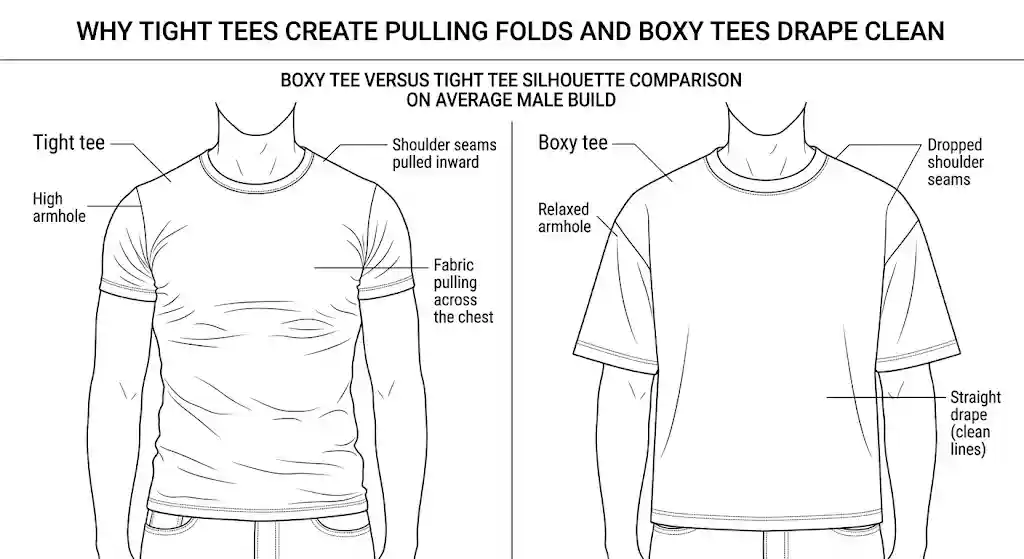
A tight tee fails in three predictable places. First, the shoulder seam sits inside the shoulder bone, which pulls fabric diagonally from the neck to the armpit. Second, the sleeve wraps the upper arm like a compression band, cutting off the clean vertical line of the arm. Third, the hem lands at the belt but rides up with any movement. The overall effect is a torso that looks pinched and a silhouette that reads as uncomfortable.
From a patternmaking view, the real problem is the armhole. A tight tee usually has a high, small armhole matched with a sleeve that has too much cap height. That combination restricts movement and creates pulling folds at the chest and shoulder. On a budget tee, where the fabric already has less recovery, the problem gets worse after the first wash.
Why a Boxy Tee Works on Almost Any Build
A boxy tee is cut with a wider chest, a straighter side seam, and a slightly dropped or extended shoulder. That creates a rectangular block from the armpit down, which does two things: it lets the fabric fall without touching the stomach, and it builds a stronger shoulder line visually. For a guy with an average build — not gym-lean, not heavy, just normal — that rectangle gives the upper body a defined shape without squeezing it.
The shoulder line is the key. In a tight tee, the seam sits on top of the shoulder, which narrows the frame. In a boxy tee, the seam often sits right at the edge of the shoulder bone or slightly beyond, which widens the frame without adding bulk. The sleeve then drops straight from that point, hiding any curve of the upper arm and making the arm look relaxed and proportional.
The Three Points You Actually Need to Check
Shoulder seam. Put the tee on and run your finger along the shoulder line. It should end at the bony edge of your shoulder, not an inch inside it. A half-inch drop is fine. More than that and you're into intentionally oversized territory, which is a different look.
Sleeve length. The sleeve should stop mid-bicep or slightly lower, and the opening should sit away from the arm. If you can see the outline of your bicep through the fabric, the sleeve is too tight. A clean gap of about half an inch between fabric and skin is the sweet spot.
Body length. The hem should hit just below the belt — covering the waistband but not the seat. If it rides above the belt when you lift your arms, the tee is too short. If it covers your entire backside, it will make your legs look shorter. A straight hem that sits parallel to the floor is the cleanest signal of a well-cut tee.
For Guys Who Lift: How to Avoid Looking Like You’re Showing Off
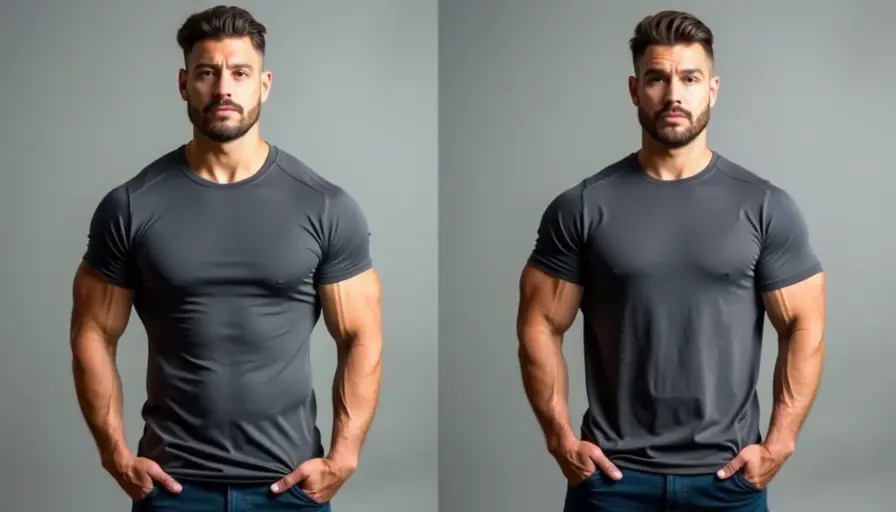
I've trained consistently for years, so I know the temptation. You put in the work, and a tight tee shows it. But there's a line between fitted and that guy. A boxy tee respects the muscle without narrating it. It gives the chest and shoulders room, drops cleanly over the lats, and doesn't grab the arm. The result is a shape that reads as strong and relaxed, not trying to prove something.
How to Get This Right on a Budget
A cheap boxy tee can look expensive if the fabric weight is right. Look for at least 200 GSM cotton — heavy enough to hold its shape but not cardboard. The neckline should have a ribbed band with a bit of tension, not a floppy raw edge. Color matters more than details: solid cream, washed black, olive, or charcoal. No logos, no chest prints, no heathered blends that read as pajama material. If you find a tee that hits those marks, buy three. You'll reach for them more than anything else in your closet.