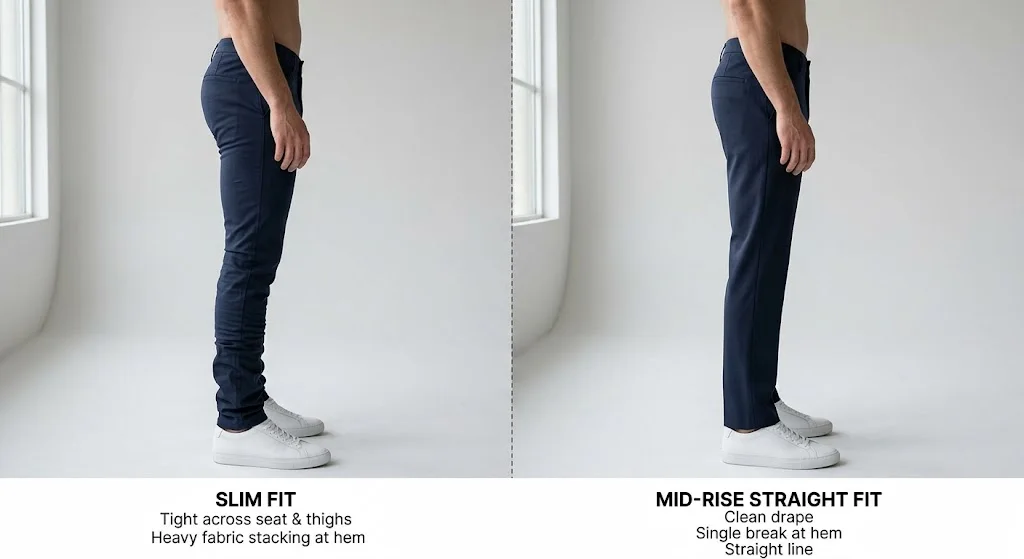
Most menswear fit advice is written for a 6'1" model with a 30-inch waist. I should know. I've spent years inside the industry adjusting patterns for exactly that body, then watching those patterns fail on normal guys who actually buy the clothes. The result is a lot of men who think pants just don't fit them. The truth is, the pants were never designed for them in the first place.
I'm 5'9" with thighs that squat and deadlift. I don't fit into most slim cuts without the side seams twisting and the hem choking my ankles. Through years of fit reviews on the production floor, I've learned that getting pants right when you're not tall or lean isn't about finding a magic brand. It's about checking four specific things on the pattern itself.
The Four Measurements That Decide Everything
When I evaluate a pair of trousers — whether on a fit model or in a discount store aisle — I look at these four points in strict order:
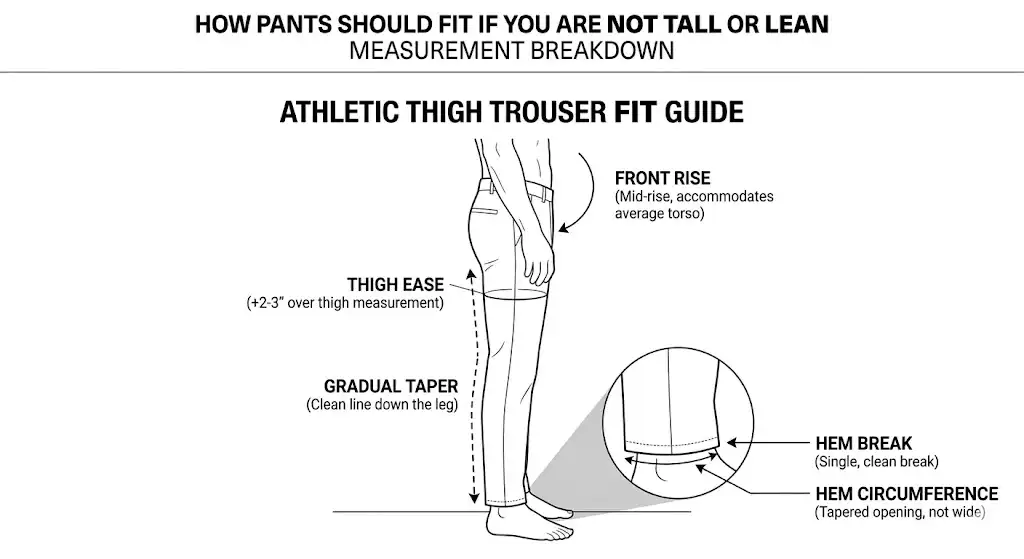
Measurement | What It Controls | Ideal for Average / Broader Build |
|---|---|---|
Front rise | Where the waistband sits; how the crotch hangs | Mid-rise (10-11.5 inches). Low rise digs into the hip and shortens the leg line. High rise swallows the torso. |
Thigh width | Whether you can move and sit without pulling | At least 1.5 inches of ease beyond your body measurement. The fabric should skim, not grip. |
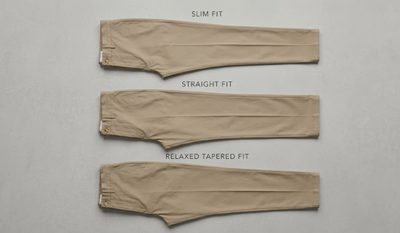
Taper degree | The shape from knee to hem | Gradual taper only. A drop of 1.5-2 inches from knee to leg opening is enough. Aggressive carrot-shaped tapers make thighs look wider and shorten the leg. |
Inseam length | Where the trouser ends relative to shoes | No break or a single slight break. Heavy stacking pools at the ankle and cuts the vertical line. |
Why Rise Is Your Best Ally
Rise gets ignored more than any other fit point. Guys check the waist size and the length and call it a day. But the rise determines where your legs visually begin. A low rise on a broader build pulls the side seams forward and creates a shelf at the seat. It also makes your torso look longer and your legs shorter — the opposite of what most shorter guys want.
A mid-rise sits just below the navel and gives the crotch enough depth to hang without tension. From a patternmaking view, I always added at least half an inch of back rise curvature for anything above a size 34 to account for glutes. Most budget brands skip that curve entirely.
The Thigh and Taper Balance
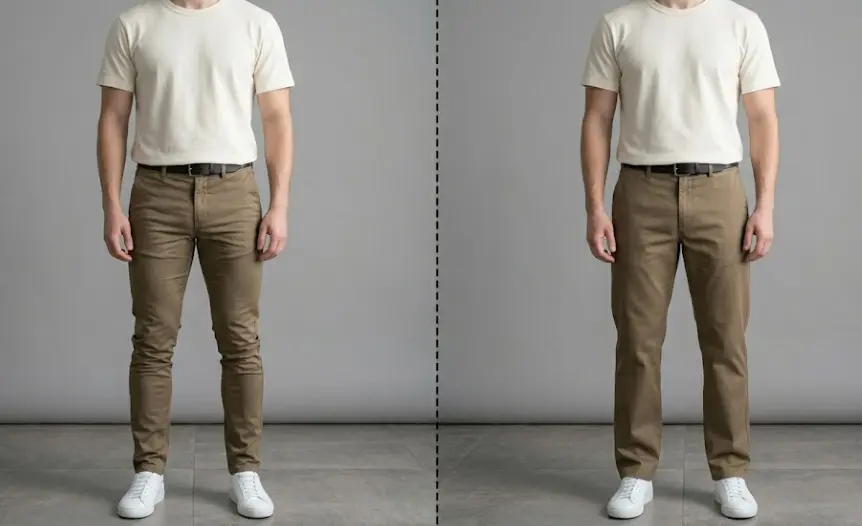
If you have bigger thighs, a straight fit or relaxed taper is not a compromise. It's geometry. A slim fit on muscular thighs grabs at the widest point and bunches above the knee, creating horizontal pull lines that widen your silhouette. A straight cut from a wider thigh through to a moderate leg opening creates one clean vertical column. That column elongates.
For guys under 5'10", a leg opening between 7 and 7.5 inches on a straight cut avoids looking either flared or carrot-shaped on most shoe sizes. The taper, if any, should happen gradually from below the knee — never starting at the thigh.
What to Avoid Completely
Four things reliably ruin pants proportions on men who aren't tall and lean. Drop-crotch cuts or exaggerated low rises shorten the leg dramatically. Heavy taper that goes from a wide thigh to a tiny leg opening creates an ice-cream-cone shape. Overly thin, limp fabric clings to every curve and leaves nothing to the imagination — and nothing to balance the frame. Excessive break at the hem with fabric stacking over the shoe cuts the leg line into segments.
Few of these problems are fixable with tailoring. A bad taper is built into the pattern from the start. So is a low rise. You're better off passing entirely and finding a cut that did the work right the first time.
The simplest rule I can offer: follow your thigh, not your waist. If the thigh fits cleanly and the rise is mid, the rest can usually be adjusted with a simple hem. If the thigh pulls and the rise is too low, no alteration saves it. Walk away.